

Worldwide, more than 366 million adults have symptomatic attention deficit hyperactivity disorder (ADHD), which is characterized by hyperactivity, impulsivity, and inattentiveness. (12) In individuals with ADHD, quality of life can be significantly and negatively impacted, as many of them report having other psychiatric conditions such as mood, anxiety, and substance use disorders, especially alcohol abuse. (8)
While ADHD is one of the most commonly diagnosed disorders in children, ADHD in adults is often misdiagnosed, undertreated, or not treated at all. (13) Continue reading to learn more about how to treat ADHD in adults.
Symptoms of ADHD in adults
It may be assumed that if an adult has ADHD, they had it as a child; however, it is now known that, oftentimes, ADHD in adults is not necessarily a continuation of childhood ADHD, which suggests that adult ADHD and childhood ADHD are two very distinct syndromes. (11) While they may be distinct, they do share common symptoms.
As mentioned previously, the core symptoms of adult and childhood ADHD are hyperactivity, impulsivity, and inattentiveness; however, with adults, the condition can be compounded by common comorbid disorders such as anxiety, bipolar disorder, depression, and/or substance abuse. (4) While hyperactivity symptoms can lessen in adulthood, distractibility and lack of attention can lead to difficulties in academic, family, social, and work environments. (13)
Conventional medicine typically involves a pharmaceutical approach using stimulant medications to treat ADHD in adults. Data is lacking as to the long-term benefits versus harms of these medications which do come with side effects such as cardiovascular issues and dependence. (15) There are, however, several nutrients that have been shown to help with ADHD symptoms.
How to treat ADHD in adults
It’s important to note that the research cited here has been conducted in children. There is limited research on natural substances specifically for ADHD in adults. However, because of the similarities, the research data may also be applied to adults.
One of the first steps an integrative practitioner can do to help adults with ADHD is to correct any underlying nutrient deficiencies. Individuals with ADHD have been shown to be deficient in a variety of nutrients, specifically iron, magnesium, vitamin D, and zinc. (14) Some of these nutrients can also be used as treatment interventions.
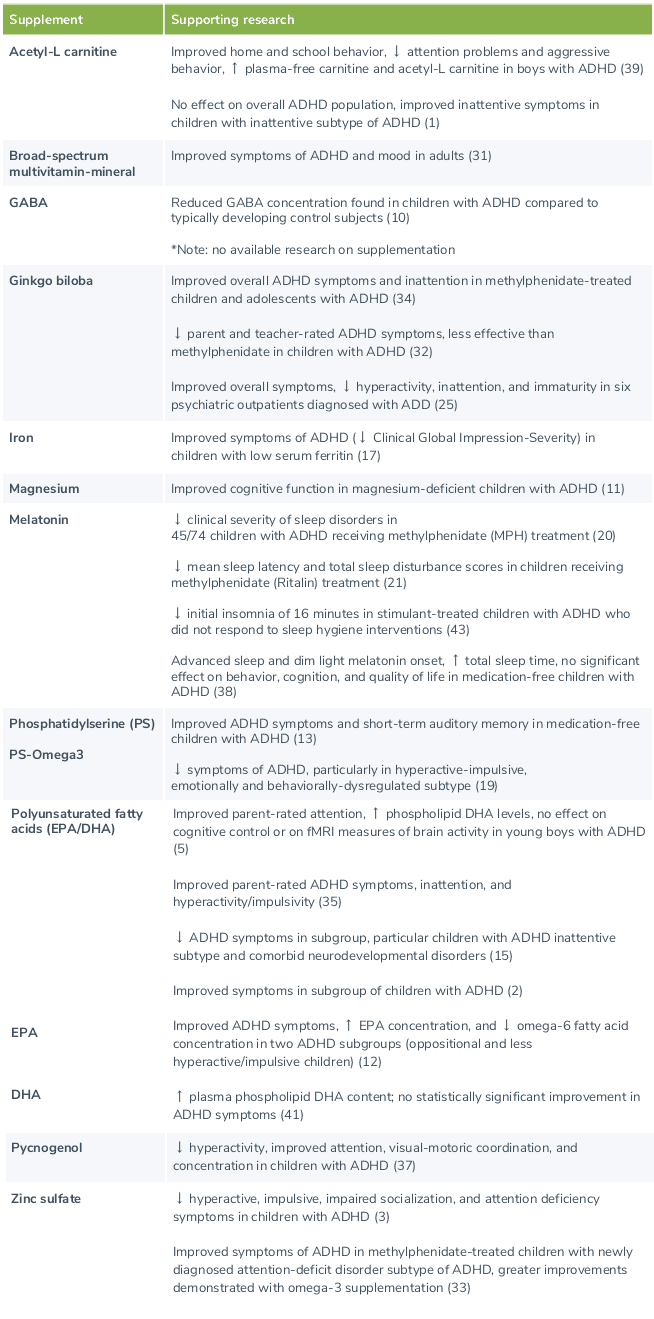 Certain dietary supplements may be beneficial in addressing the symptoms of ADHD. Research demonstrates that magnesium and vitamin D supplementation may improve behavior problems compared to a placebo.
1. Magnesium and vitamin D
A 2020 randomized, double-blind controlled trial demonstrated that the combination of magnesium and vitamin D was associated with improved behavior and social issues, as well as anxiety/shy scores compared to a placebo. (6) A 2021 randomized controlled trial showed that supplementing with magnesium and vitamin D not only was associated with improved behavior problems compared to a placebo, it also was significantly correlated with mental health. (7)
A 2019 randomized, double-blind trial using only vitamin D also showed improvement in symptoms, especially inattentiveness and particularly in those participants who were deficient in vitamin D. (2)
2. Essential fatty acids
Just as with the previously mentioned nutrient deficiencies, individuals with ADHD may also have low levels of omega-3 essential fatty acids, and supplementation in these individuals can help reduce symptoms. (5) A 2017 systematic review concluded that omega-3 fatty acid supplements may help improve symptoms of attention, hyperactivity, impulsivity, learning, and memory in children with ADHD. (3)
3. L-theanine
Two studies involving boys with ADHD demonstrated that the combination of L-theanine with caffeine was associated with improved sustained attention and overall cognitive performance compared to a placebo. (9)(10)
Other substances
According to a 2016 review, several other natural substances have been identified as having the potential to help address symptoms of ADHD including:
- Acetyl-L-carnitine
- Bacopa monnieri
- Ginkgo biloba
- Ginseng
- Passionflower
- Pine bark extract (specifically pycnogenol) (1)
The bottom line
If left untreated, adult ADHD can have a profound negative impact on quality of life. There are many natural agents available that may help ease the symptoms of ADHD in adults. Correcting any nutrient deficiencies and trying one or more of the herbs and nutrients featured here may be helpful in addressing symptoms of ADHD.
If you feel you are struggling with adult ADHD, be sure to speak with an integrative practitioner for guidance about using dietary supplements to help with symptom management before making changes to your wellness plan.