

The liver is an integral component of our body’s detoxification system. Liver detoxification is divided into two major pathways or “phases” that convert toxins from lipophiles (fat-soluble) to hydrophiles (water-soluble) metabolites through a series of reactions. Phase I reduces fat, glucose, carbohydrates, proteins, and toxins absorbed through the digestive tract into intermediary substances, while Phase II converts these substances into water-soluble waste products that can be eliminated from the body. (4)
Once the liver has done its job, the secondary detoxification organs work to eliminate waste from the body. Our skin helps eliminate toxins through sweating, while our lungs do the same through respiration. The gastrointestinal tract and kidneys help us eliminate toxins that have been filtered through the liver via bowel movements and urination.
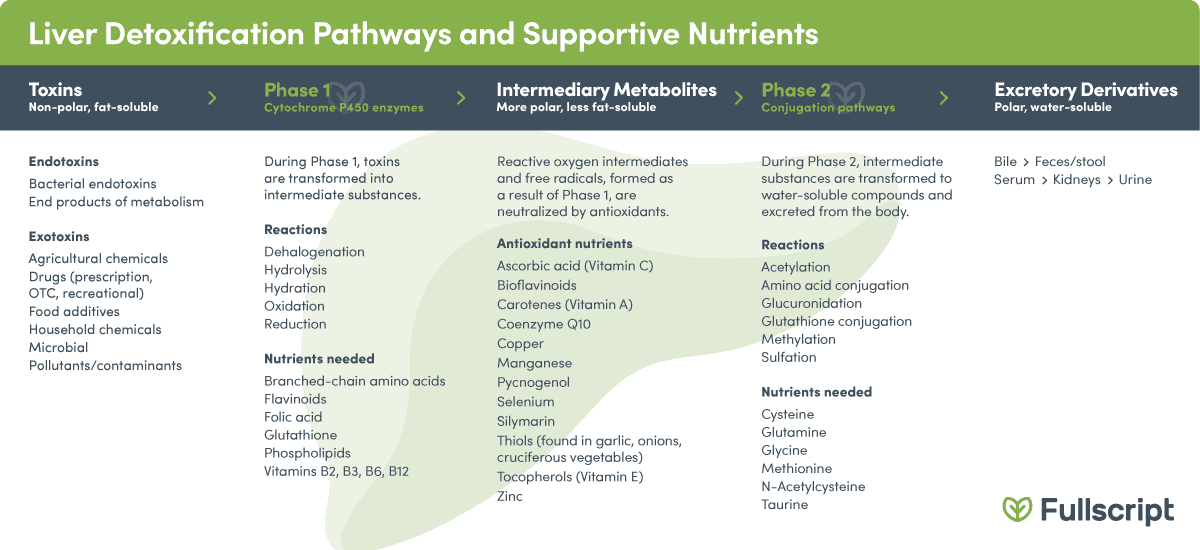 Explore the liver detoxification pathways and supportive nutrients.
What can I do to support my body’s natural detoxification process?
Practicing a healthy lifestyle is the simplest thing you can do to help keep your body and detoxification system healthy. Minimizing exposure to environmental toxins, minimizing stress, maintaining daily hydration status, and consuming a balanced diet will help you ensure that your body is getting the essential nutrients it needs to detoxify optimally. Regular exercise is especially important as it can help facilitate toxin elimination through sweating and respiration.
Despite maintaining a healthy lifestyle, there are certain situations that may lead to overexposure of harmful toxins. Some examples include taking certain pharmaceutical medications that require metabolization, digestive disturbances such as constipation that prevent efficient toxin elimination, and a lack of nutrients needed to fuel the detoxification process. Research has revealed that the accumulation of toxins in the body can contribute to chronic health conditions including cardiovascular disease, type 2 diabetes, and obesity. (6) If your body is in need of a helping hand when it comes to detoxification, consider supplementing your diet with the following beneficial nutrients.
Supplementing your diet to support detoxification
Research has shown that certain dietary supplements may assist in detoxification.
Glutathione and N-acetylcysteine (NAC)
It’s impossible to talk about detoxification without discussing the role of glutathione. Glutathione, a tripeptide composed of cysteine, glycine and glutamic acid, is found in most of our cells in two forms: reduced (GSH) and oxidized (GSSH). (16) The ratio of GSH and GSSH regulates the cell redox system responsible for maintaining cellular homeostasis by generating and eliminating reactive oxygen/nitrogen species and free radicals. (17) Essentially, glutathione functions as an antioxidant, which helps reduce oxidative stress and remove free radicals generated during the detoxification process. Glutathione also acts as a cofactor for a number of antioxidant enzymes and aids in recycling antioxidants vitamin C and vitamin E. Furthermore, glutathione facilitates excretion of toxins (mercury, POPs), regulates cell proliferation and apoptosis, and plays a role in phase II liver detoxification reactions. (16)
Due to its poor absorbability in the human digestive tract, glutathione supplements are commonly prescribed in liposomal form. N-acetylcysteine (NAC), a precursor to glutathione, helps to maintain glutathione levels and neutralizes free radicals (Kerksick & Willoughby, 2005). Clinically, NAC has been used to restore depleted GSH levels due to its improved bioavailability and absorption. (6)
Vitamin C
Vitamin C is a powerful antioxidant that plays an important role in detoxification, including the metabolism and elimination of heavy metals. (9) Several antioxidants, including Vitamin C, have demonstrated preventative and therapeutic effects on several liver diseases, including alcoholic and nonalcoholic fatty liver disease, cancer, and viral hepatitis. (5)
A study investigating the relationship between the use of vitamin C supplements and gallstone prevalence provides evidence that regular vitamin C supplementation is associated with reduced prevalence of gallstones. (19)
Milk Thistle
Similar to Vitamin C, milk thistle contributes to overall liver health, preventing damage to the liver due to the antioxidant and free radical scavenging effects of silymarin and silybin, which are the active constituents found primarily in milk thistle seed. Silymarin also supports liver cell regeneration and protects the membrane of liver cells by preventing the entrance of toxins into the cells. (18)
Furthermore, silymarin acts in modulating the enzymes responsible for glutathione metabolism and has shown to restore glutathione levels in humans. (15) A study of thalassemia patients examined the effects of silymarin supplementation on serum antioxidant and oxidative status. The study found that daily supplementation of silymarin significantly increased reduced glutathione (GSH) levels in patients compared to a placebo. (3)
Whey protein
Protein supplements are commonly recommended for athletes, but did you know that dietary protein is an essential component of a detoxification protocol? Certain amino acids, including glycine, taurine, glutamine, ornithine, and arginine, are involved in phase II (or the Conjugation Pathway) of liver detoxification. They work by attaching to molecules helping the liver break down and clear toxins. (6)
In addition, the amino acids methionine and cysteine are precursors to the formation of glutathione. (6) Whey protein, in particular, may be beneficial due to its ability to boost glutathione levels. A study examining the effects of whey protein supplementation found that 500 microg/ml of hydrolyzed whey protein isolate (WPI) increased intracellular GSH by 64% compared to the control group. This significant GSH increase is found similarly when supplementing with N-acetylcysteine (NAC), a common treatment for glutathione depletion. (11) Another study found that whey protein supplementation significantly increased antioxidant and phase II enzyme activity necessary for liver detoxification. (12) Furthermore, researchers in Thailand have found that WPI supplementation can increase GSH levels and improve immunity in cancer patients undergoing chemotherapy. (1)
B Vitamins
B vitamins are essential to the proper functioning of liver detoxification. Methyltransferases are a class of phase II liver enzymes that play a role in methylation with the help of nutrient cofactors and methyl donors. These cofactors include certain B vitamins such as cobalamin (B12), pyridoxine (B6) and folate (B9). Studies have found that inadequate methylation has been linked to an increased risk of disease. (6) A study of newly diagnosed cardiac patients examined the link between B vitamin status, hyperhomocysteinemia (high homocysteine level) and oxidative stress, and found that inadequate intake of B vitamins, particularly folate, pyridoxine, and cobalamin, was associated with hyperhomocysteinemia. The elevated levels of homocysteine resulted in depletion of glutathione. (20)
Additionally, supplementation of certain B vitamins, along with various nutrients, has been shown to enhance the synthesis of glutathione in the body. (6) A study examining the effects of oral folic acid supplementation on patients with type 2 diabetes, found that glutathione levels increased as a result of folic acid supplementation. (2)
Sulforaphane
Sulforaphane is a phytochemical metabolized from glucoraphanin and can be obtained through the diet by consuming glucoraphanin-rich foods such as broccoli and broccoli sprouts, brussels sprouts, and cabbage. (8) Sulforaphane is an essential component of the detoxification pathway as it activates the production of phase II liver enzymes. Specifically, sulforaphane induces Nrf2, the transcription factor involved in the cell’s defenses including detoxification. (7) Studies have also noted the cancer-protective effect of sulforaphane in helping to neutralize harmful carcinogens in the body. (8)
Dietary Fiber
After fat-soluble toxins have been processed in the liver, it’s important to ensure your body can eliminate waste effectively. The gastrointestinal tract allows us to digest our food, absorb nutrients into the body and eliminate waste, preventing the absorption of harmful substances into the bloodstream. Fiber is an essential component to gut barrier function and proper elimination as it binds to toxins and helps to usher them out of the body through the gastrointestinal tract.
Fiber not only provides bulk to your stools and binds toxins for excretion, it also makes up one of our body’s physical barriers. Fiber increases glycoproteins called mucins, which help to make up mucus. Mucus protects the lining of the gut, provides lubrication and prevents translocation of toxins and other harmful substances. (14)
The bottom line
Minimizing exposure to toxins, maintaining a healthy, balanced lifestyle, and supplementing your diet when necessary are effective strategies to help support detoxification. If you’re a patient, consult your integrative healthcare practitioner for recommendations and an appropriate treatment plan for you.