

Obesity and other chronic diseases, such as cardiovascular disease, cancer, and diabetes, affect approximately 42% (2) and 60% (1) of Americans, respectively. Healthy dietary patterns may significantly improve chronic disease risk and overall health; however, identifying your individual nutritional needs and meeting them is often challenging. The Dietary Guidelines for Americans, which influences federal food, nutrition, and health policies, has a significant impact on the nutrition status and health of Americans. Continue reading to learn about the Dietary Guidelines for Americans, 2020-2025 and how you can apply these evidence-based recommendations to your diet.

The Dietary Guidelines for Americans are updated every five years to reflect the most current food and nutrition research.
What are the Dietary Guidelines for Americans?
The Dietary Guidelines for Americans is a document that is updated every five years and released in partnership by the U.S. Department of Agriculture (USDA) and the U.S. Department of Health and Human Services (HHS). The document provides nutritional information and recommendations for all Americans. The Dietary Guidelines for Americans, 2020-2025 was released on December 29th, 2020 and the U.S. government will be implementing the new dietary guidelines in national health objectives, nutrition education, and food assistance programs. (7)
How were the Dietary Guidelines for Americans developed?
The updates included in the 2020-2025 dietary guidelines were informed by an independent scientific review and report from the 2020 Dietary Guidelines Advisory Committee. The Advisory Committee, a collective of healthcare practitioners, clinical researchers, and other scientists from across the United States, followed several steps in developing their recommendations, including:
- Reviewing the 2015-2020 Dietary Guidelines for Americans
- Examining federal data on dietary intakes and diet-related chronic disease rates
- Conducting systematic reviews of scientific evidence on health and nutrition
- Using an analysis known as food pattern modeling, which demonstrates how certain dietary changes will impact how the population will meet nutrient requirements (7)
Did you know? Systematic reviews are considered the gold standard for developing evidence-based guidelines.
What’s new in the Dietary Guidelines for Americans, 2020-2025?
While many of the dietary recommendations remained the same as the 2015-2020 Dietary Guidelines for Americans, the new document highlights three key ways that the recommendations have evolved over time. The new guidelines recognize the prevalence of diet-related chronic diseases, such as cardiovascular disease, type 2 diabetes, and obesity, and their detrimental effects on health. The 2020-2025 guidelines focus on healthy individuals, individuals with overweight or obesity, and individuals with increased chronic disease risk, with the notion that all of these groups can benefit from healthy dietary patterns. Expanding on a theme from the 2015-2020 Dietary Guidelines for Americans, the new guidelines emphasize the health effects of dietary patterns as a whole instead of individual nutrients, foods, and food groups. Lastly, the current edition of the dietary guidelines focuses on a lifespan approach by breaking down the dietary guidelines by life stage, from infancy to older adulthood, which wasn’t done in previous editions. This includes recommendations for breastfeeding infants, as well as the introduction of foods and potentially allergenic foods to infants. (7)
Did you know? For the first time, this edition of the dietary guidelines incorporated public comments on the selected topics and scientific questions that guided the research and development process. (7)
The dietary guidelines
The Dietary Guidelines for Americans, 2020-2025 are categorized into four primary guidelines.
Guideline 1: Consume a healthy diet across the lifespan.
Regardless of your age, eating a wide variety of healthy foods is essential for achieving and maintaining good health and mitigating your risk of developing chronic diseases, such as cardiovascular disease and type 2 diabetes. The guidelines recommend consuming nutrient-dense foods as opposed to processed and packaged foods that are characteristically high in added sodium, sugar, and fat. Nutrient-dense foods and beverages provide vitamins, minerals, and other health-promoting components (e.g., antioxidants, fiber, probiotics) while containing minimal amounts of added sugars, sodium, and saturated fat. Examples of the most nutrient-dense foods according to the guidelines include:
- Beans and legumes
- Eggs
- Fat-free and low-fat dairy products
- Fruit
- Lean meat and poultry
- Nuts and seeds
- Vegetables
- Whole grains (7)
Dietary pattern recommendations for various age groups are outlined in the table below.
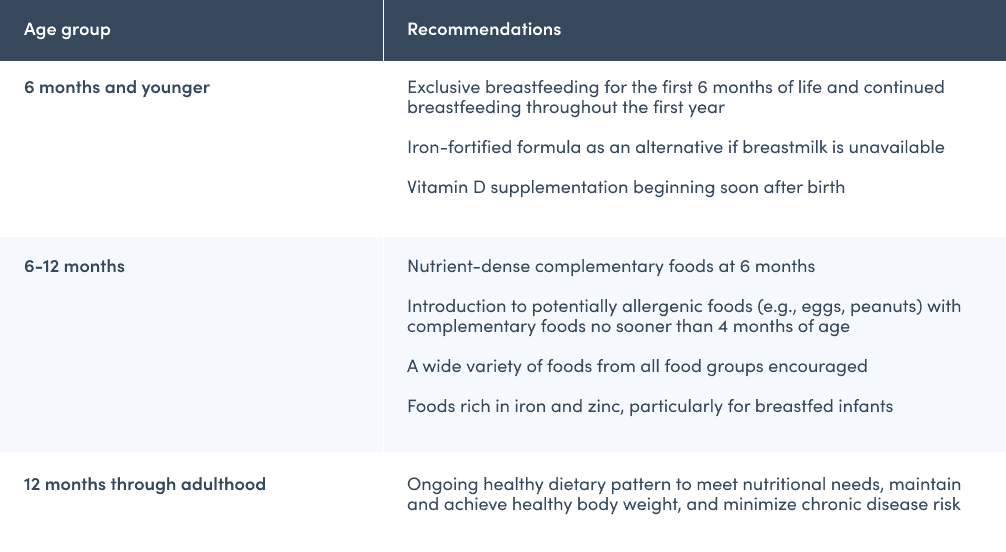
Dietary needs shift throughout the life cycle. (7)
Guideline 2: Customize your dietary pattern to satisfy personal preferences, cultural traditions, and budgets.
No matter how your cultural background or personal taste preferences influence your diet, the dietary guidelines are designed to allow for flexibility and customization. Nutrient-dense foods and spices are plentiful in all cultures. Focus on incorporating a broad variety of foods in your diet while honoring your heritage and preferences.
On a budget? Despite common beliefs, eating healthy doesn’t need to be expensive. In-season produce and dried or canned fruits, vegetables, beans, and legumes are cost-effective options.
Guideline 3: Emphasize nutrient-dense foods to meet your daily food group needs while considering calorie limits.
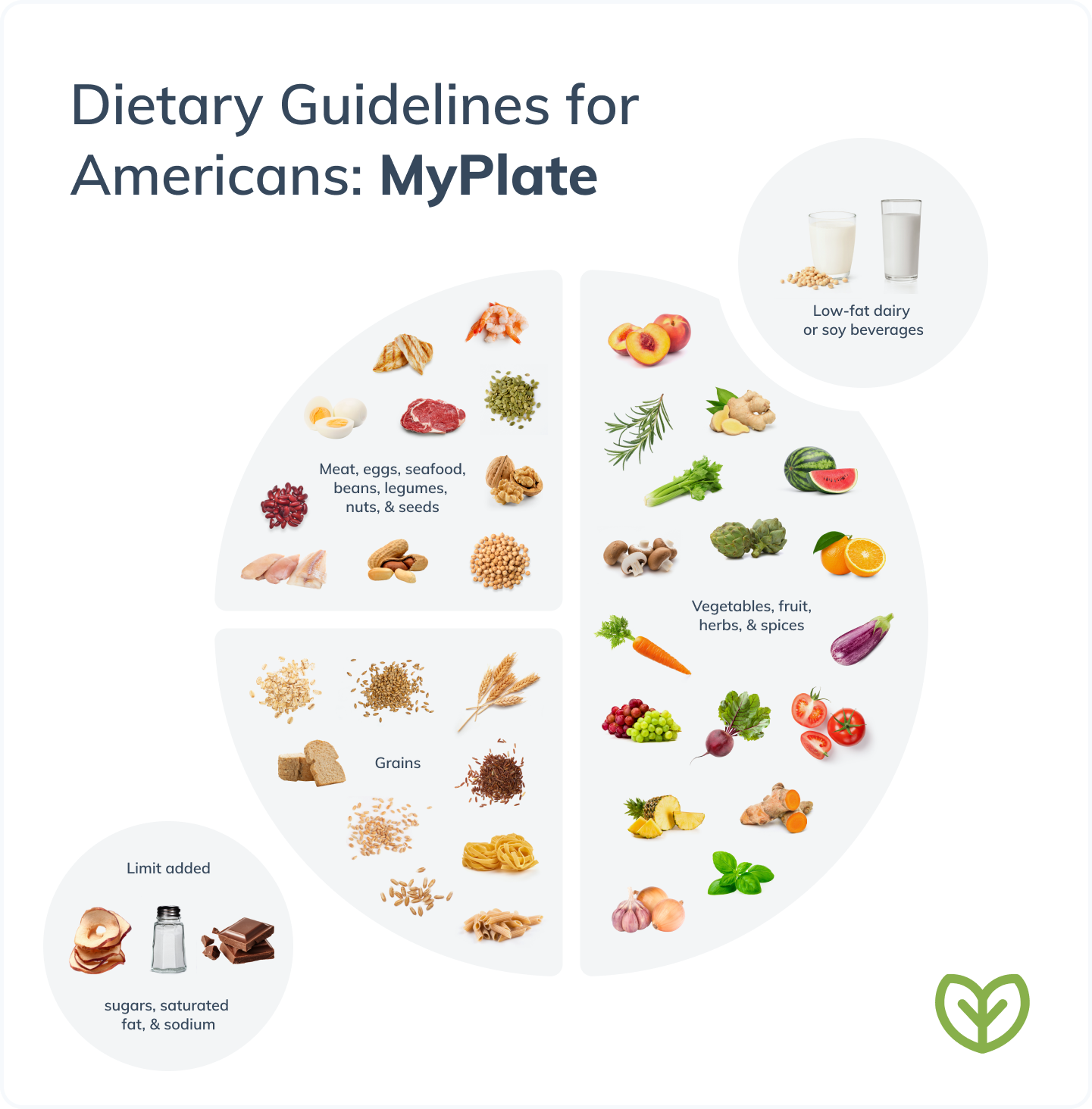
The foundation of a healthy diet includes an array of nutrient-dense foods from the food groups outlined below. Determining your calorie needs depends on numerous factors, including your age, sex, height, weight, and activity level. The USDA MyPlate Plan resource below can help you determine your daily calorie needs.
Vegetables: Include all types of vegetables in your diet, including dark green, red, and orange vegetables as well as starchy vegetables (e.g., sweet potatoes, peas).
Fruit: Consume fruit, including whole fruit (e.g., fresh, frozen, canned, dried fruit) and 100% fruit juice. Because 100% fruit juice lacks dietary fiber and can cause spikes in blood sugar, most of the fruit in your diet should consist of whole fruit. If consuming canned fruit, choose fruit that is packed in 100% fruit juice instead of syrup to avoid added sugars.
Grains: Whole grains, which are grains that have the bran and germ intact, should make up at least half of the grains in your diet. Examples of whole grains include brown rice, whole wheat, barley, and oats.
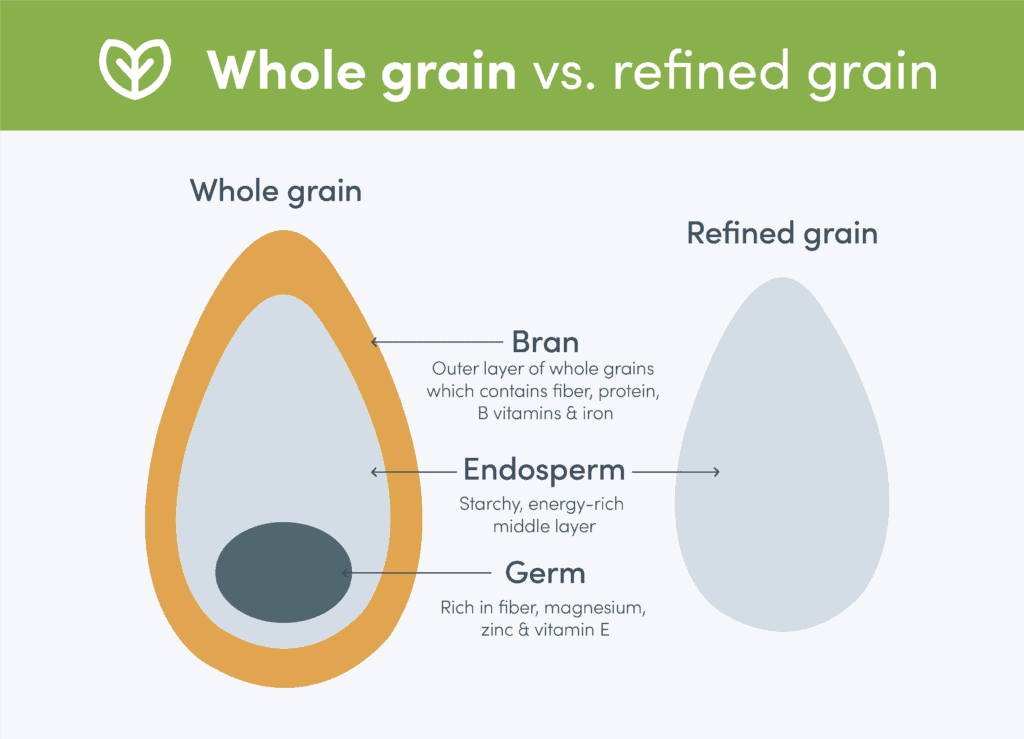
Whole grains are rich in fiber, vitamins, and minerals. (4)
Dairy: To minimize saturated fat intake, choose fat-free or low-fat milk, yogurt, and cheese. Soy beverages and yogurt are suitable alternatives for individuals who cannot tolerate dairy. Be mindful of consuming dairy products found in foods high in sodium, such as pastas and pizzas, and of the added sugars in products such as yogurts, ice cream, and flavored milk.
Protein: Choose lean cuts of meat and poultry, fish and shellfish, and eggs. Additionally, several plant-based foods provide protein, including beans, peas, lentils, soy products (e.g., tofu, tempeh, edamame), nuts, and seeds.
Oils: Consume vegetable oils rich in heart-healthy unsaturated fats and limit consumption of animal fats (e.g., butter, lard). Examples of vegetable oils include olive, avocado, and sunflower oils. (7)

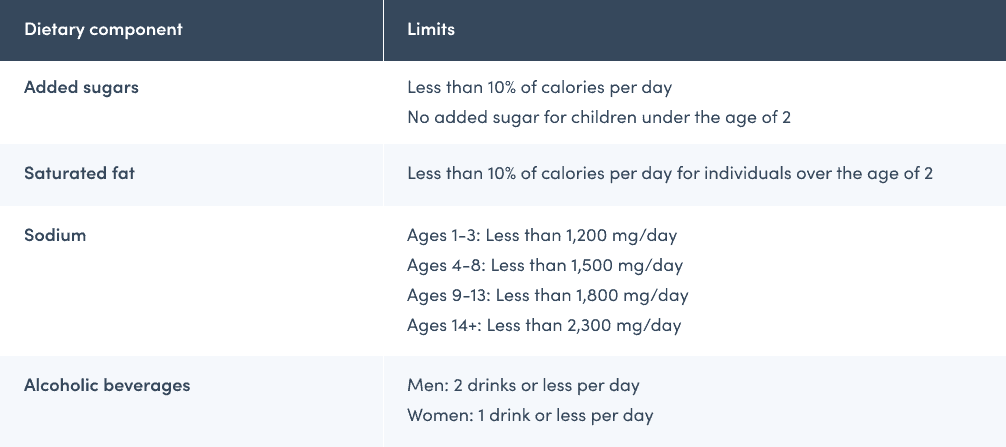
The updated guidelines recommend that children under the age of two avoid added sugars.
Guideline 4: Keep foods high in added sugar, sodium, and saturated fat to a minimum.
Healthy diets abundant in nutrient-dense foods leave little room for added sugar, sodium (salt), saturated fat, and alcoholic beverages. Foods and beverages containing added sugar, sodium, and saturated fat should be consumed in moderation at every life stage to promote general health and mitigate the risk of diet-related chronic disease. Furthermore, adults who choose to drink alcoholic beverages should do so in moderation. As a general rule, aim to consume 85% of your calories from nutrient-dense foods and less than 15% of calories from foods and beverages composed of added sugar, sodium, and saturated fat. For the average American consuming 1,650 to 2,300 calories per day, 15% of calories is equal to approximately 250 to 350 calories. Be mindful of sodium in packaged and prepared foods, which tend to contain high amounts of sodium. Read food labels and watch out for products that contain 20% or more of your daily value of sodium in a single serving. For an individual limiting their sodium to 2,300 mg per day, 20% is equal to about 460 mg per serving. (3) The table below outlines the recommended limits for added sugars, saturated fat, sodium, and alcoholic beverages.
Whole grains are rich in fiber, vitamins, and minerals. (4)
Did you know? The average American consumes 3,393 mg of sodium per day, which exceeds the recommended limit for adults by nearly 1,100 mg. (7)
Implementing the Dietary Guidelines for Americans
If you’re interested in following the dietary guidelines but aren’t sure where to start, the USDA offers several helpful resources. The MyPlate Plan and Start Simple with MyPlate App are designed to help individuals and families apply the guidelines and build healthy habits.
The MyPlate Plan
The USDA MyPlate Plan is an online tool that provides personalized targets for calorie and food group intakes based on individual factors, including:
- Age
- Height
- Level of physical activity
- Sex
- Weight (5)
The Start Simple with MyPlate App
The Start Simple with MyPlate App, available on both the App Store and Google Play, allows you to select daily food goals, track your progress, and earn badges as your goals are completed. The MyPlate app is intended to help you make positive changes and stay accountable using notifications and reminders. (6)
Limitations and future considerations
Considering the field of nutrition and health science is continuously advancing, future editions of the Dietary Guidelines for Americans will evolve in a similar fashion. The 2020 Dietary Guidelines Advisory Committee report suggested that updates to the Dietary Reference Intake (DRI) recommendations for all age and sex groups are urgently needed. (8) The USDA and HHS plan to fund further research, such as studies to re-examine the daily requirements for energy, carbohydrates, fat, and protein for all individuals. (8) For the current dietary guidelines, the Advisory Committee had proposed that the recommendation for sugar intake be reduced to 6% of daily calories, although this request was denied. (8) Sugar recommendations remain at 10% of daily calories, which can potentially be improved upon in future iterations of the guidelines. Other organizations, such as the World Health Organization, suggest that reducing sugar consumption to below 5% of calories provides additional health benefits, such as reducing the risk of dental caries (cavities). (9) The 2020-2025 dietary guidelines maintained the previous daily limit for alcoholic beverages at two drinks for men and one drink for women per day. This was contrary to the Advisory Committee’s report that recommended that the limit of alcoholic beverages for men be changed to one drink per day on days when alcohol is consumed. (8) As a result, future guidelines may further limit the recommended alcohol intake for men.
The bottom line
The Dietary Guidelines for Americans, 2020-2025 provides a helpful framework to follow in order to improve your dietary patterns and overall health at any age. The updates to the dietary guidelines are based on current evidence, including federal data on dietary intakes and chronic disease rates. In addition to the inclusive and engaging guideline document, several government resources, such as the USDA’s MyPlate Plan and Start Simple with MyPlate App, are available to support individuals in making healthy dietary changes. The Dietary Guidelines Advisory Committee will continue to evaluate evolving nutrition research every five years and advise on adjustments as necessary. (7)